- Home
- Insights
- Podcasts
- Private Capital Pulse
- Private Capital Pulse: Episode 5 – US Investment Trends (Part One)

25 March 2025 • 9 minute read
Private Capital Pulse: Episode 5 – US Investment Trends (Part One)
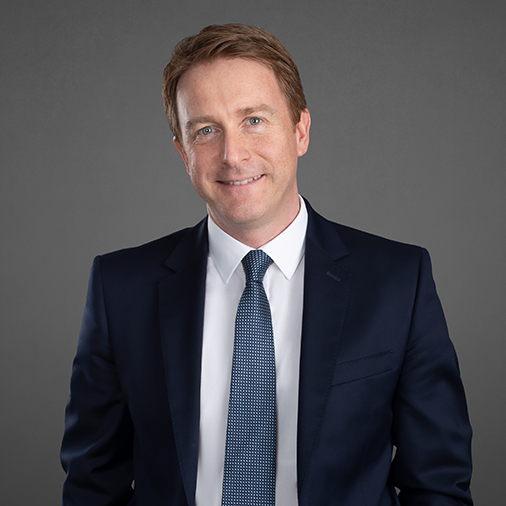
Welcome to our fifth episode of Private Capital Pulse. In this episode, split into two parts, our host Jon Ireland (Partner and Head of DLA Piper's Australian Investment Management and Funds practice) chats with Hilary Turner (Senior Associate, Investment Funds) on the current trends in global and US investment.
Keep an eye out for part two of this episode and please don’t hesitate to reach out to Jon, with any questions you may have on the content in this video or suggestions on what you would like to see next.
Stay ahead of the curve by tuning into our bite-sized episodes, also available on YouTube, Spotify and Apple Podcasts or your preferred podcast platform.
Listen now
TRANSCRIPT EPISODE 5 (part one)
Hello and welcome to the latest edition of Private Capital Pulse, brought to you by DLA Piper Australia. My name is Jon Ireland. I'm a corporate funds partner based here in Sydney and you're tuned into Private Capital Pulse.
If you're joining us for the first time, this series of bite sized interviews is intended to cover the private capital universe in all its various forms, and we are joined by industry experts from DLA Piper and other places to talk us through the latest trends and themes in that space.
Today, we have with us Hilary Turner, who is a dual qualified US and Australian lawyer and works with us here in Sydney. Hilary regularly works with investors on LP side investor representation work and I’m absolutely delighted to have you with us here today, Hilary.
Great to be here with you, Jon.
We've actually got a lot to cover, in fact, we've got so much to cover we're going to do, this topic of investment trends with a bit of a US spin over two episodes. So, this is Part One of the two episode miniseries I guess you could call it, we're going to be doing, as I said, a slightly deeper dive into a number of areas around some of those global, and U.S. themes which are obviously very current at the moment.
So without further ado, thanks again, Hilary. We'll get cracking. So, keen to kick off then in terms of hearing from you what you're seeing as the key trends in new investment funds, particularly in private equity and venture capital.
Sure, I think recently and I think this will change moving forward is that the fundraising timelines have significantly expanded, I think it was harder to raise capital over the past few years. But I have a feeling that that's going to change. During COVID in 2020, we were seeing timelines move much faster and then there was a little bit of a backlash and now I think we're going to get into a much more consistent pacing in terms of fundraising, you know, raising new funds, the length of the fundraising period, when the investment period starts in that fundraising period. I think we're going to go to a much more balanced timeline.
I think another, this is less so with PE and VC, but credit funds are the new asset class, so we're seeing a lot of new funds and a lot of innovative products in that space and investors are very keen to get access to those kinds of deals and funds. I think another area of a key term, which is a little bit less investor friendly, and it's hard to tell if this is a change from past practice or if some of the increased disclosure and transparency is really shedding a light on this, but there's been an increased scrutiny on fees and particularly the fees that managers are paying themselves.
So, this is not solely the management fee, this is those those affiliate fees where the manager might have a, you know, a consulting practice and investment trading desk and the fund is paying that affiliate of that sponsor those fees and it kind of increases the overall amount that those sponsors get from the investors, but they're oftentimes some of the in-house services, they would have been previously covered by the management fee.
So, I think that's a space where sponsors are creating more fee streams for themselves and investors are becoming a bit more wary on, you know, what those fees are, how they're calculated, and the transparency about those fees. Yeah, it's really interesting on the fee part.
Certainly, quite a complex commercial discussion space that we're seeing at the moment on that part. I guess another continuing theme over recent times has been ESG. So, keen to hear your thoughts on what you're seeing and whether you think that's going to be, you know, continuing trend or, area of focus moving forward.
Yeah it's hard to say because I think in non-U.S. jurisdictions, there is still somewhat of a focus on ESG. A lot of European managers and European investors, and Australian investors, especially the Supers, are required and are looking for ESG sensitive managers. Whereas in the US over the past few years, both at the State level and at the Federal level, especially now with the new administration, there's actually this trend towards prohibition on ESG. So, some State pension and retirement funds aren't able to actually invest in funds that have a really strong ESG mandate.
So, I suspect that ESG will become less and less important to institutional investors. It already is so in the US, and I suspect that might trickle down to non-U.S. jurisdictions. Especially the returns for ESG focused funds don't improve, which I just don't think they are because I think globally there's this trend against it.
Yeah, that's interesting. I was going to say it's interesting to map out that regional distinction, I guess, or sort of global distinction between regions on the approach to ESG. And you mentioned the different types of institutional investors. Do you have some views on based on what you see with working with them as compared with individual or high net wealth investors in terms of their expectations and strategies? Are there differences between the investor types on that front?
Yeah, I think I mean, institutional investors, meaning the large pension funds or sovereign wealth funds cut really big cheques. So they want to see very specific terms. They also come with a lot more regulatory requirements. A lot of institutional investors, especially the public pension funds, have limitations on their ability to provide indemnification, their ability to provide certain lending, and so they have a lot of special requirements that they impose on sponsors.
But also, they do make the bigger cheques and they're pretty good LPs. They're sophisticated, they sit on the LPAC, they're involved in decision making they're pretty commercial as long as they get what they need, they love to participate in co-investments, I mean, they're a good good partner to have for major investors.
High net worth individuals I think are often less concerned with some of the minutia. They are able to accept a lot more terms, so don't come to funds asking a lot. But they do want to make sure that those returns are correct, and often some high net worth individuals will come through asset managers which will negotiate a bulk fee discount which is beneficial to the high net worth individual.
So, I think high net worth individuals have the ability to be a lot more flexible and move faster with investments because they don't have to go through these specific mandates or a really long drawn out investment committee process so they have agility on their side. But, their cheques are often smaller and so they often take the terms of the fund which they've received the benefit of the institutional investors which will push to negotiate the documents to be a little bit more LP aligned. So, they get the benefit of that which is good for them.
I mean, I guess that makes sense in terms of their approach. Maybe just focusing in on on the institutions and the common types of institutional investors that you might work for; the pension funds, endowments, or insurance companies, how much if at all, do their legal needs differ between the different types of structures of their organisations when they're looking at the fund structures that they're investing in?
I would say the biggest factor from an investor perspective is probably tax. I mean, if you're a US public pension fund or even a state pension fund you're tax exempt. So you're not quite worried about UBTI. Whereas an endowment or a foundation would be worried about UBTI, and that has some blocker implications and that the blocker has expenses as well as your tax filing obligations, so those kind of structuring considerations really depend on the investor type.
And then there's also additional regulatory considerations. If you are a private pension plan or if you are subject to the Bank Holding Companies Act, you also have further considerations of how you're treated as an ERISA investor or under the documents, or if there's sufficient protections for bank holding companies where there's certain voting limitations that have to be implemented if you hit certain ownership thresholds.
So, making sure that those are included in the document that you really need to have those as you'll run into regulatory issues in your own, or what investors are looking for.
Yeah hearing that, and the tax is a big piece. In terms of legal risks more generally that investors would need to mitigate, how does that look in the context of the alternative investment funds, such as PE and real estate? How are they approaching that risk mitigation strategy?
It really depends on the investor themselves, what they're expecting or what their risk tolerance is, and it also depends on the sponsor. If it is a well known sponsor, your set of risks are very different than if it's a new manager that's maybe investing in emerging emerging markets.
There's different considerations. So, for a large investment manager, I mean, obviously at the end of the day, everyone wants to make sure the economics are clear and understood and are consistent with the commercial expectations and that there's not a way to kind of, meddle with the economics to make it more GP friendly. I think as you have larger funds, they're probably not going to change a lot of their terms. But the sponsors will have a lot of, systems in place that you don't have to worry about.
The fund having access to appropriate deals or deploying capital. They'll deploy capital and they'll have access to great deals. But you need to make sure that you have sufficient transparency and reporting. And I think as funds grow and they kind of expand into all, all life parts of the fund.
So again, that consultancy practice, that trading desk, that this is where conflicts of interest start to pop up. And so you also need to make sure that they're also managing through their, their conflicts and that their, policies in place are sufficient to manage those conflicts with smaller managers. You want to make sure that they're not just taking your money, charging you a management fee, and not really deploying it in any sort of meaningful way, or not going after the good deals. The last thing you want to do is invest in a zombie fund where you can't get out of it, so you have to stay in it, but you also can't remove the manager, and they're not investing. And it becomes kind of a nightmare. I think that risk is very low with well-established managers.
We need to be cautious about the zombies, of course. So that makes perfect sense to be focused on those areas. Well, that's great, Hilary, thank you for that. We will, put a pause for this Part One right there and look forward to rejoining for Part Two of this focus on global investment trends and particularly with a U.S. spin.
Next episode, Part Two, we're going to be looking at things like diligence and how investors manage reg change. So, join us, that'll be coming up in a few weeks' time. But for now thanks for joining us. You can pick us up anywhere you get your podcasts and importantly, we're always interested in your ideas for topics for future episodes, so please do contact us either through the channel or to myself, Jon.Ireland@dlapiper.com and we'll look forward to re-joining you next time.