- Home
- Insights
- Podcasts
- Private Capital Pulse
- Episode 5 US Investment Trends Part Two

24 April 2025 • 8 minute read
Private Capital Pulse: Episode 5 – US Investment Trends (Part Two)
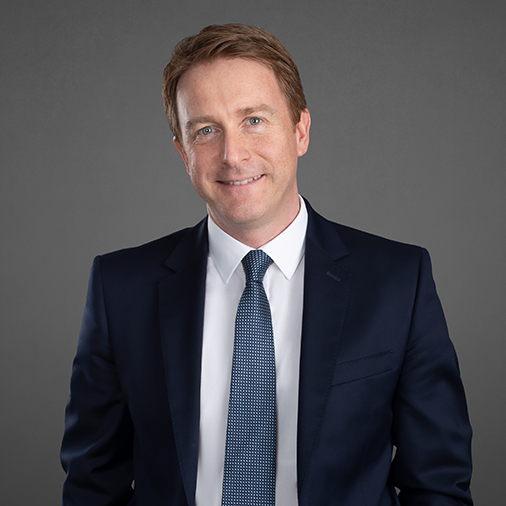
In Part Two of our episode exploring trends in global and US investments, Hilary Turner (Senior Associate, Investment Funds) explains how the upcoming regulatory changes in the US might impact on institutional investors and their strategies for selecting and investing into funds.
Further, this episode discusses the following questions:
- What are institutional investors prioritising in their due diligence processes when it comes to evaluating a new fund?
- What are the red flags that institutional investors are looking for when considering a new fund?
- What are the main challenges on the horizon for institutional investors in investment funds?
Please don’t hesitate to reach out to our host Jon Ireland (Partner and Head of DLA Piper's Australian Investment Management and Funds practice), with any questions you may have on the content in this video or suggestions on what you would like to see next.
Stay ahead of the curve by tuning into our bite-sized episodes, also available on YouTube, Spotify and Apple Podcasts or your preferred podcast platform.
Listen now
Transcript
Hello and welcome to Private Capital Pulse, the series brought to you by DLA Piper Australia. My name is Jon Ireland. I'm a corporate funds partner based here in Sydney at DLA Piper. I'm delighted to bring you Part Two in this series of global and US investment trends, and I'm joined again by Hilary Turner. Hilary, great to have you back again for Part Two.
Glad to be back with you, Jon.
Terrific. Well, we had so much to cover last time that we decided to divide this up into a couple of parts. So, if you haven't seen Part One. Please do pick that up on the channel. We're going to be branching into the regulatory change and due diligence topics this time. So, we'll kick off, Hilary, if I can, with just the first question on that strand. How do regulatory changes impact institutional investors strategies for selecting and investing into funds. And what are you seeing in terms of in the market at the moment? Any particular recent changes that you're advising clients on?
Well, previously we had the private fund advisor rules that I think were, as an LP lawyer, worked in a lot of ways to be beneficial to LPs. And I think recently those have kind of put a pin in them. I think the current U.S. administration, tags itself as business friendly. So, I have a feeling there's going to be fewer regulations. But I think making sure that the LPs kind of collectively advocate for themselves for better transparency and better reporting and that it is uniform. And those are the sorts of regulatory changes.
I think cross-border investment will probably increase. I think that there's a lot of opportunities to be had. I think the regulations now will change the type of asset class that is more favourable. I mean, as of today, the U.S., I think is putting a pin in the tariffs. But if those tariffs do go forward, it'll make construction costs really expensive. So, I wouldn't see a lot of, you know, real asset or real estate funds being a popular investment choice until we have a bit more clarity. I think the U.S. regulatory landscape is… you never know. I wish I had a crystal ball.
Yeah, indeed, I think we all do. It's clearly a very fluid space, obviously post new administration. And so naturally, there will be a heavy piece on monitoring as well. In terms of the view overall, and pulling a few of these strands together to the due diligence process then that you see institutional investors undertaking when you're advising them on that and they're looking at evaluating a new fund, what are the sorts of things that you're seeing them prioritise more than others?
I think first and foremost is economics. I think making sure that they get the right economics for their projected returns is probably the the most important piece of any fund investment. Unfortunately, as a lawyer, sometimes you have to be, I don't think it's the bearer of bad news, but you kind of have to be the rational person to say, this is great, and this fund is going to knock it out of the park. But just what if it doesn't knock it out of the park? And what if something happens? And how are you protected? And so, I think making sure the economics are right and making sure that there's sufficient governance at the LP level to ensure that if the relationship does go pear shaped, which hopefully it won't, that you will have sufficient levers to actually manage and exit out of the fund or manage down the fund, however is best for the situation. And, you know, I think a lot of times you want to, I mean, as a lawyer, we summarise the terms and everyone gets comfortable with them. And then in an ideal world, no one will pick up the document again because the fund will be doing so well and everything will be running smoothly that we don't need to go look at the specifics of the document until something bad happens. And then you do need to really think through the mechanics of what happens, which is a low risk. But it's a, it's a big risk if something happens.
Yeah. Understand. So, among that, are there any kind of key red flags that you tend to see institutional investors looking at when they're considering up front a new fund?
Well, I think some institutional investors run a separate and parallel diligence process to ours so generally as legal counsel, we are looking at the the four corners of the investment document, looking at what it's saying. Does this make sense? And institutional investors often run their own parallel due diligence about the turnover of their staff and their key investment professionals. Who is really making the decisions? Where are they in their professional career? Does it look like they're going to seek employment elsewhere or seek retirement? And if they do seek retirement, is there a sufficient protege or group of people that can take over managing the fund? So, they kind of run that process in parallel to us.
I think overall, this is a very canned answer, but one of the key factors is making sure that there's an alignment of interest, because I think investment funds, at the end of the day, you want to make sure that when the fund wins, everyone wins. It can't be, winning at the cost of your investors. And I think a big red flag is when sponsors treat investors as a blank cheque. I think it really should be approached as a partnership. I mean, institutional investors are sophisticated. They're good advisors to have on your LPAC, and they're going to be pragmatic and commercial in their approach because they want the fund to succeed. Everyone wants the fund to succeed because then everyone walks home with, you know, the returns that they want. And so, when you see managers discounting that relationship or ignoring it completely is when I just don't know if there's a lot of respect for the investor. And that's when I think, things can go a little bit murky.
Yeah. I think that's a really important point around alignment, it can be lost sometimes in the cut and thrust of negotiation. Maybe just to wrap up then, one further one, just if I could get you to get your crystal ball out and have a little look forward for us and in terms of what the main challenges are that you see on the horizon for institutional investors looking at the investment fund space.
It's hard to say. I mean, 2009 was pretty big, you know, I was graduating high school in 2009. I do think that the credit fund space we're running the risk of it becoming maybe a potential area for a financial issue. I'm not saying that within the next five years, but just based on the lack of regulation and the interest of it. I mean, there's a reason why credit funds are a popular asset class now, because I think the lending and banks have become… there's a lot of regulation in them, and so people are finding alternative ways to borrow and lend, and that is with credit funds, which are great. But I do think that they either might attract regulation such that they become less valuable or there's going to be some sort of, crunch or disaster. Hopefully there won't be. But I do think that that's a potential risk. I think that there's a lot of competition and available funds in the market, and not all of those funds are going to be winners. And so when you're looking overall about how the alternative assets performs, I don't think it's going to perform as strongly as it has historically. I think there's going to be really big winners and some losers. And so investors might try to diversify and look elsewhere. I think that is good and that it will breed a healthy secondaries market. And for secondaries funds, which is great. I do a lot of secondaries work and I think they're interesting deals. I think that they're, they've exploded over the past five years. And there's a lot of sophisticated players in those markets. I think that's an area in which, non-U.S. sponsors and investors are going to participate more heavily because a lot of it is with the US now. And I think AI is going to change a lot of things. I think AI will probably be beneficial to investors, and maybe less so for sponsors, because investors are going to be able to synthesise data and ask a lot more pointed questions for funds. And that being said, I do think that the way that sponsors will respond to that is trying to, hide information. So I think getting information out of funds and making sure that the reporting and transparency is available will become much more of a challenge.
Well that makes perfect sense. And it's yeah, it's a very dynamic picture with, as you say, the advent of AI and what that can bring on the LP side. And more generally.
So, I think that's probably all we have time for today. I think we've covered a huge amount over the last couple of mini episodes. Hilary, that's terrific to have you with us for those. Thank you so much for your time with that. And, we'll call that a wrap. So, as we always say, if you have any ideas for future topics that you'd like to hear about, please do contact us either through the channel or to myself, jon.ireland@dlapiper.com. Stay tuned for future episodes. We'll be covering with other experts, and coming to you very soon. But for now, thanks for joining us, and we'll see you next time.