
6 minute read
Integrity in carbon markets
An introduction to why integrity is critical to the effectiveness of carbon markets, highlighting the key factors that influence the quality of carbon credits. It explores current voluntary initiatives and codes of conduct, examines how carbon credits are used in claims, and considers their implications for ESG reporting and corporate accountability.
Please see our "What is carbon pricing?" section for more information on the difference between mandatory and voluntary carbon markets.
What is integrity?
Cambridge Dictionary defines integrity as “the quality of being honest and having strong moral principles that you refuse to change.”
When we’re discussing the integrity of carbon credits, we’re talking about the honesty of them – do they represent what they claim to represent, and are the claims made using credits factual and not misleading? We’re also referring to the moral principles associated with carbon credits: are they created in an equitable way, and do they cause any harm?
Why does carbon credit integrity matter?
The purpose of carbon credits is to do something good: to reduce or remove emissions to facilitate the pathway to net zero and avoid or mitigate the life-threatening effects of the climate crisis. Integrity is fundamental to their existence and value.
If carbon credits don’t have integrity, they could cause more harm than good, be used in ways that misrepresent what has actually been achieved and become the subject of negative publicity. They may lose their value, divert funding away from projects that could deliver real climate benefits, or ultimately become unsuitable for use in offsetting emissions.
If carbon credits from a project are discredited, the project could be abandoned, which could create further negative effects.
What do carbon credits with integrity look like?

- Free and prior informed consent of local communities
- Respect for human rights
- Fair benefit sharing
- Empowering local communities
Protecting local communities and ensuring they benefit from carbon projects
To achieve a just climate transition, it’s vital that carbon emission reduction/removal projects respect and protect local communities and involve them in the benefits carbon projects bring.
Key considerations
- Protecting human rights, particularly in relation to existing use of land earmarked for the project and surrounding land.
- Free prior informed consent (FPIC) – vital as part of respecting the rights of local people and promoting the long-term success of the project to minimise land rights disputes and emissions reversals and leakages.
- Considering, promoting and mitigating negative impacts on related environmental and social factors that could impact local communities eg biodiversity, access to water, and rights of way.
Benefit sharing
Where land belonging to or used by local people is used for carbon emissions reduction projects or an emissions reduction project could, even after mitigations, negatively impact communities, the benefits of the project should be shared with the local community.
Participants should consider whether a benefit-sharing proposal provides a tangible benefit to local communities. Sharing revenue and carbon credits fairly and meaningful reinvestment are usually appropriate alongside project‐specific and incidental benefits (eg ongoing use of land, shade, harvests).
- Climate action isn’t “at all costs” – projects should respect and ideally enhance the contribution to mitigating other key concerns eg biodiversity.
- Projects that actively promote co-benefits like empowerment of women.
- Used only alongside independent progress towards near-term emissions reduction targets.
- Additionality – ensuring that credits are only generated in respect of GHG emission reductions or removals that wouldn’t otherwise have occurred.
Making sure carbon credits generate real change
Many stakeholders are concerned that using carbon credits could hinder, delay or replace companies’ efforts to reduce greenhouse gas (GHG) emissions in their operations and supply chains.
To prevent the voluntary carbon markets just “moving emissions around” rather than reducing them, industry codes and standards (eg the VCMI Claims Code of Practice) require that users of carbon credits demonstrate independent progress on near-term emission reduction targets.
The idea is that carbon credits can be used to offset emissions that can’t currently be removed or to bridge gaps where implementing targets will take time but shouldn’t distract the entity or provide an excuse for not reducing emissions.
- Scientifically accurate basis for calculating tonnes of CO2e reduced/removed (carbon accounting).
- Third-party verification of carbon accounting.
- Regular review of scientific basis for calculating credits.
- Updates to carbon accounting if scientific knowledge progresses (for instance, if our understanding of soil carbon sequestration changes).
- Adjustment to carbon accounting if sequestered carbon is unexpectedly released.
What if emissions are later released?
If carbon credits are used to offset an entity’s emissions, but the carbon sequestration represented by those credits is later released into the atmosphere, those credits lose their integrity.
One way to mitigate this risk is to use buffer pools.
Projects contribute a percentage of credits to the buffer pool. If there are reversals, an equivalent number of credits is cancelled in the buffer pool, so the issued credits maintain validity.
But there are concerns about the sufficiency of buffer pools. So some carbon standards require the affected project to replenish the buffer pool.
For example, VERRA’s AFOLU buffer account deed requires project proponents to:
- report any reversals that happen during the crediting term or within 40 years of the start date of the project;
- if there’s an unavoidable reversal: credit the buffer pool with credits equivalent to the buffer pool credits cancelled after the reversal above the project’s previous buffer contributions; and
- if there’s an avoidable reversal: credit the buffer pool with credits equivalent to the buffer pool credits cancelled after the reversal.
- They have sufficient public information so users of the credits and others can assess the claims underlying the issuance.
- Robust system for creating and transferring credits to avoid double-counting.
- Used to make factual claims that aren’t misleading.
Current initiatives: VCMI
The Voluntary Carbon Markets Integrity Initiative was established to help ensure that voluntary carbon markets make a significant, measurable, and positive contribution to achieving the Paris Agreement goals, while also promoting inclusive and sustainable development.
Claims Code of Practice
- Highlights two key risks: supply-side (benefits to host communities), and demand-side (ensuring carbon credit use increases overall GHG mitigation rather than just substituting for existing actions). The code addresses demand-side risks.
- Users of carbon credits have to demonstrate progress towards near-term emission reduction targets independently to use carbon credits.
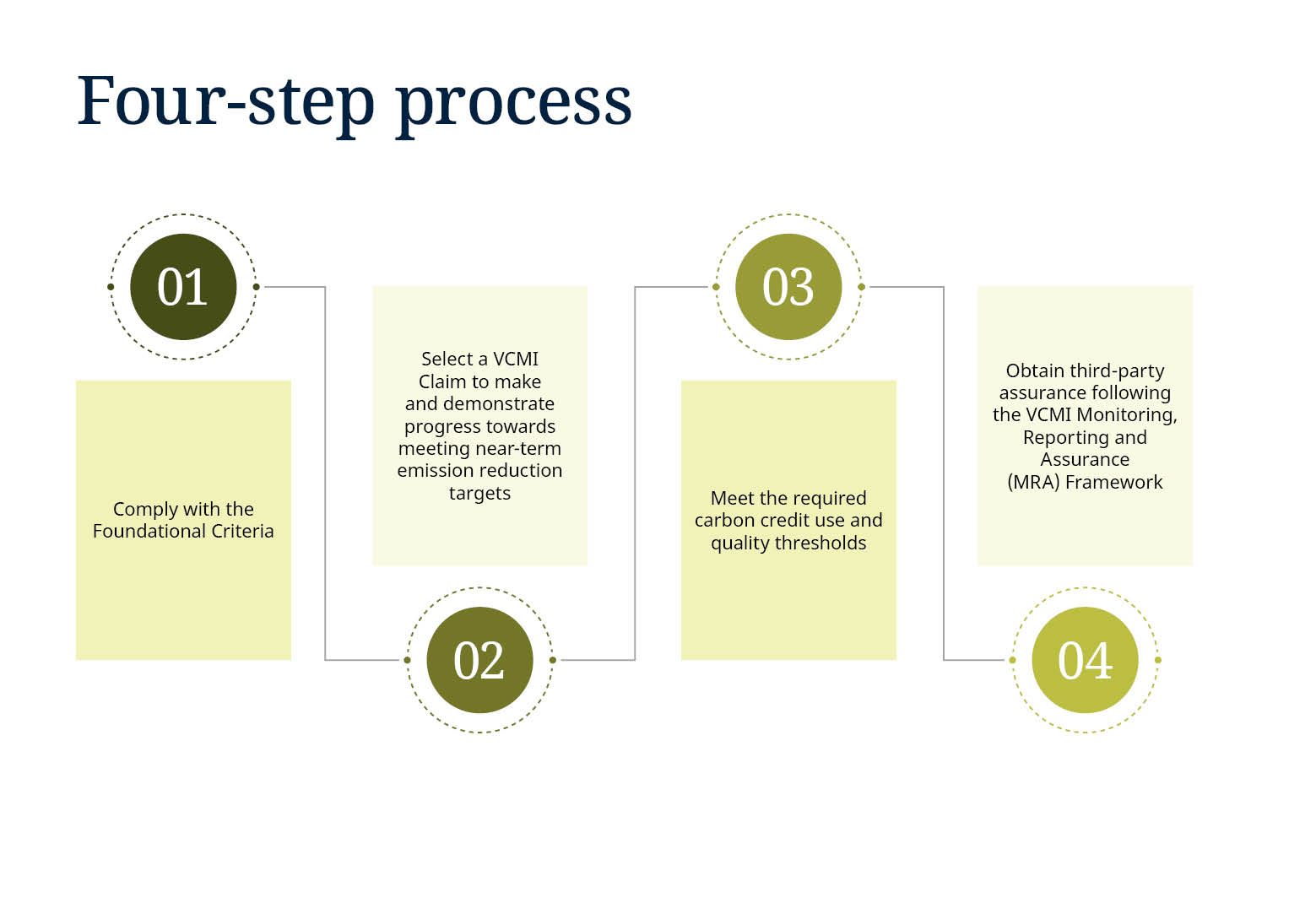
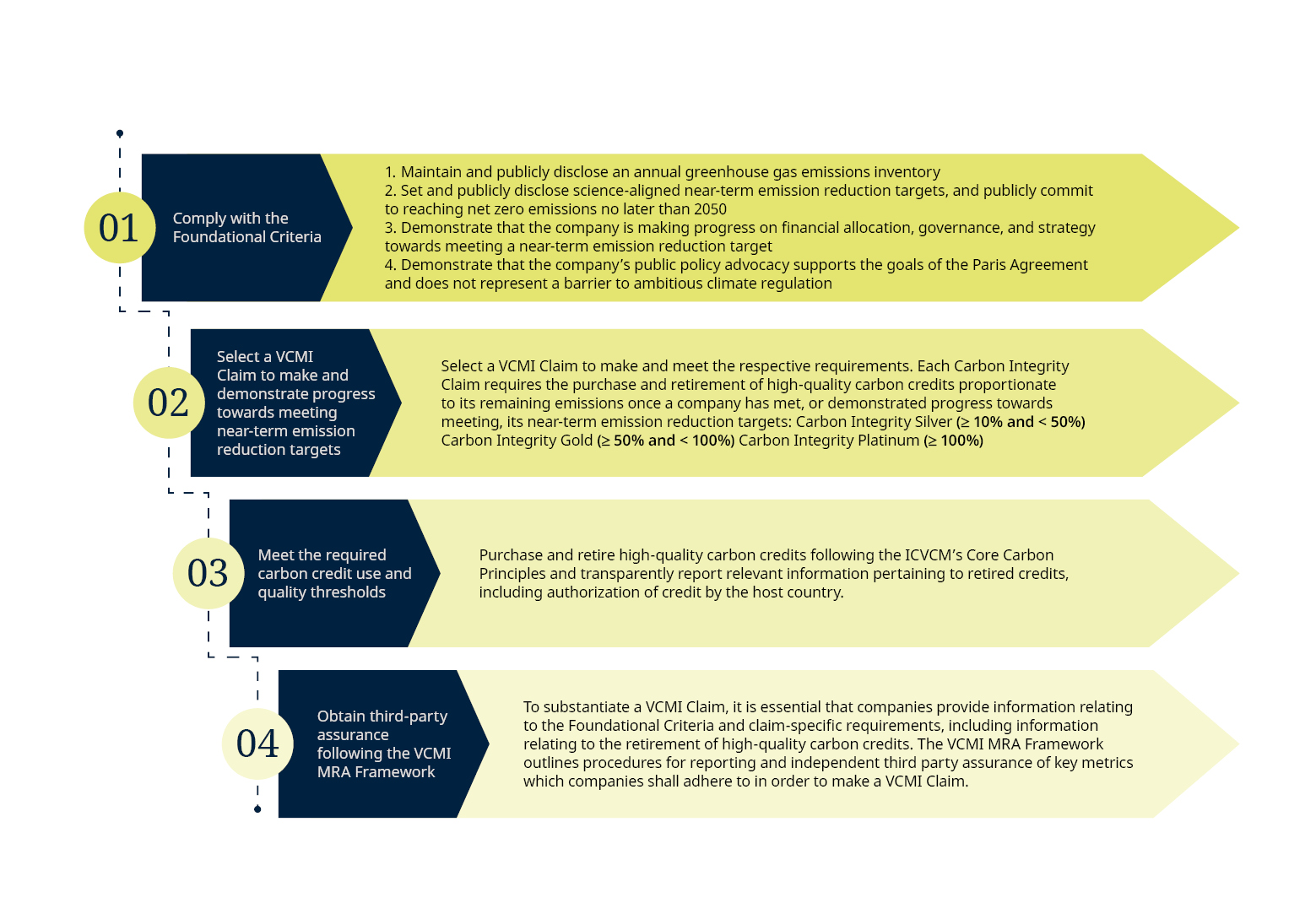
Source: VCMI Claims Code of Practice v.2 November 2023
Regulating claims made about carbon credits
Some jurisdictions are introducing regulations about the claims that can be made using carbon credits to retain integrity in their use.
The US FTC Publishes the "Green Guide" outlining best Pointless far sustainability and climate class.
The Green Claims Directive is a European Commission proposal for a directive that would require companies to substantiate the voluntary green claims they make in B2C commercial practices, including green claims based on using offsets like carbon credits.
The UK’s Competition and Markets Authority has developed a Green Claims Code. And the Financial Conduct Authority has introduced an anti-greenwashing rule for regulated entities.
The Australian Competition and Consumer Commission has a guide for businesses making environmental claims. It urges particular care when relying on carbon credits for offsets.
Canada’s Competition Act was amended in June 2024 to include anti-greenwashing provisions.
The Korea Fair Trade Commission published Guidelines for Review of Environment-Related Labelling and Advertising.
10 Core Carbon Principles
 Source: icvcm.org/core-carbon-principles, accessed 24 July 2024
Impact on ESG reporting
Reporting entities have to understand their reporting obligations, specifically regarding the use of carbon credits. For example, the EU Corporate Sustainability Reporting Directive (CSRD) requires companies to report on social and environmental aspects of their activity, including their use of carbon credits. ESRS Disclosure Requirement E1-7 relates to understanding the extent and quality of carbon credits the undertaking has purchased from the voluntary market).
E1-7 61(c) requires an undertaking making public claims of GHG neutrality that involve the use of carbon credits to explain the credibility and integrity of the carbon credits used, including referencing recognised quality standards. Entities reporting under CSRD can’t include any removals that have been sold to third parties as carbon credits in their own information on GHG removals and storage. Under CSRD, carbon credits can’t be disclosed as a way to reach GHG emission reduction targets (which are disclosed under E1-4).