3 June 2026 • 17 minute read
Food and Beverage News and Trends - June 3, 2026
Prater named new head of FDA Human Foods Program. Donald Prater, DVM, has been appointed Acting Deputy Commissioner for Food at the United States Food and Drug Administration (FDA). He replaces Kyle Diamantas, who was named Acting Commissioner following the mid-May resignation of Martin Makary, MD, MPH. With more than 20 years of experience at the agency, Dr. Prater most recently served as the Principal Deputy Associate Commissioner for Food. Prior to that, he served as the Acting Director of FDA’s Center for Food Safety and Applied Nutrition, helping oversee its transition into the Human Foods Program (HFP) as part of a department-wide restructuring in 2024. As Acting Deputy Commissioner, Dr. Prater exercises authority over all HFP entities and operations, including resource allocation, risk-prioritization strategy and decision-making, policy initiatives, and major response activities involving human foods. He also oversees food resources in the agency’s Office of Inspections and Investigations.
Canada to amend food and pesticide laws as part of National Food Security Strategy. Canada’s Spring Economic Update 2026 signals planned amendments to the Canadian Food Inspection Agency Act and Pest Control Products Act to require consideration of food security and food costs. These changes are part of a forthcoming National Food Security Strategy aimed at improving access to affordable, nutritious food and strengthening domestic capacity. The Update also proposes funding for Health Canada to enhance pesticide review processes (fully cost recovered) and highlights up to CAD7 billion in capital commitments by 2030 (led by Farm Credit Canada and private partners) to support innovation in Canada’s agriculture and food sector.
FDA’s Human Foods Program launches two new food safety resources. On May 13, FDA announced the release of two new web resources highlighting how industry can work with FDA to develop best practices and use root cause analysis (RCA) to strengthen understanding of food safety issues and prevent recurrences of food safety incidents. The first, the new Food Safety Best Practices for Human Foods webpage, highlights collaborations on best practices and other documents. FDA acknowledged in its release that best practices are typically established by industry through experience and lessons learned. However, FDA is working with industry to provide technical assistance, share relevant scientific information and data, and help ensure that its best practice guidelines comply with applicable FDA regulations. The second new resource, the Strengthening Food Safety through Root Cause Analysis webpage, outlines best practices and some of FDA’s ongoing work to support the use of RCAs to enhance food safety and prevent recurrence of identified issues. FDA describes RCAs as an essential tool for methodically identifying the causes of a food safety incident and a cornerstone of a prevention-based approach to food safety. Lessons learned from an RCA, FDA added, can then be used to develop strategies to prevent recurrence.
Ahead of a June 15 meeting, FDA issues discussion paper on lot-level tracking requirements. FDA has released a discussion paper that addresses potential flexibilities in the lot-level tracking requirements in the final Food Traceability Rule. The paper comes ahead of the June 15 virtual public meeting, “Challenges and Solutions in Lot-Level Food Traceability.” The agency states that it is encouraging those attending and speaking at the meeting to consider the topics in the discussion paper. The public meeting is free and open to the public, but registration is necessary to attend. General registration will remain open until June 14; individuals who wish to speak during the event must register by June 5. FDA is also requesting feedback on the discussion paper itself. A second virtual public meeting on aspects of the Food Traceability Rule, “Solutions and Progress in Lot-Level Traceability,” will take place in November.
FDA releases evaluation of eight phthalates still authorized for food contact use. To inform its coming post-market safety assessment of the food contact uses of phthalates, on May 27, FDA released a scientific evaluation of the eight ortho-(o)-phthalates still authorized as plasticizers for food contact use. The evaluation analyzed the phthalates to determine whether they should be considered chemically- or pharmacologically-related (CPR) substances, which would help to enable assessment of their combined risk to consumers in a cumulative risk assessment. The following eight phthalates were evaluated:
- Diisononyl phthalate (DINP)
- Diisodecyl phthalate (DIDP)
- Di(2-ethylhexyl) phthalate (DEHP)
- Dicyclohexyl phthalate (DCHP)
- Butylphthalyl butyl glycolate (BPBG)
- Diethyl phthalate (DEP)
- Ethylphthalyl ethyl glycolate (EPEG)
- Diisooctyl phthalate (DIOP)
The evaluation, FDA stated, supports CPR grouping for DEHP, DCHP, DIOP, and DINP for a future cumulative risk assessment. FDA noted that in preparing the evaluation, it also considered the 24,000 public comments received in a request for information on the current uses, use levels, and safety of these eight phthalates.
FDA reopens comment period on two petitions regarding use of solvents as color and food additives. On May 27, FDA reopened the comment periods for two notifications of petitions published in the Federal Register in January 2024. They are:
- A color additive petition seeking to amend the color additive regulations to remove the use of the solvents ethylene dichloride, methylene chloride, and trichloroethylene
- A food additive petition seeking to amend the food additive regulations to remove the use of the solvents benzene, ethylene dichloride, methylene chloride, and trichloroethylene
Comments, in either electronic or written format, may be submitted by June 29.
Health Canada proposes to authorize jagua blue as a food color. On May 14, Health Canada issued a Notice of Proposal (PFAA-2603) to amend the List of Permitted Food Colours to authorize jagua (genipin-glycine) blue, a food color not currently permitted in Canada. The additive is manufactured by combining glycine with the juice of unripe jagua fruit (Genipa americana), producing a blue polymer intended to impart blue color to foods or, when blended with other permitted colors, to achieve green, purple, or brown hues. The proposed authorization follows Health Canada's premarket safety and efficacy assessment, which considered dietary exposure, allergenicity, chemistry, microbiology, nutrition, toxicology, and technical efficacy. Under the proposal, jagua blue would be permitted across a wide range of food categories at maximum levels of use (calculated on a blue polymer basis) varying by category, from 120 ppm in products such as jams, gelatin desserts, and yogurt to 2,000 ppm in dried breakfast cereals. Comments may be submitted through July 28.
New FDA video explains how to use the Expanded Decision Tree. On May 14, FDA released a new instructional video, “A Practical Guide to Using FDA’s Expanded Decision Tree,” supplementing the agency’s Expanded Decision Tree (EDT) chemical toxicity and risk screening tool. That tool, released in July 2025, was designed to help evaluate chemicals based on their structural features in order to determine the safety of their use in foods. The video, which appears on the FDA’s site and on social media, sets out step-by-step guidance on using the EDT to classify compounds according to their relative toxic potential.
Health Canada publishes prebiotic monograph for health claims. Health Canada has released a monograph to guide manufacturers of prebiotic natural health products in labeling their goods and applying for product lisences. Health Canada noted the intent of the monograph is to help to establish a formal regulatory framework enabling prebiotic supplement manufacturers to make scientific claims about their product’s health benefits. For example, it may be used to support claims for specified prebiotic ingredients under certain conditions of use. Prebiotics are defined by their ability to confer health benefits by selectively feeding beneficial gut microbiota.
DLA Piper publishes 2026 mid-year PFAS update: How federal and state regulation is shaping compliance and litigation risk. Federal and state regulation of per- and polyfluoroalkyl substances (PFAS), as well as related policy initiatives such as Make America Healthy Again (MAHA), continue to accelerate and evolve, with key compliance deadlines approaching in mid-2026 and early 2027. At the same time, recent federal actions, including the US Environmental Protection Agency’s proposed scaling back of portions of the PFAS drinking water standards, may introduce additional uncertainty regarding the scope of future federal regulation. Our alert tells you more.
New FDA guidance on design and conduct of PER studies of new infant formulas. FDA has issued “Guidance for Industry: Protein Efficiency Ratio (PER) Rat Bioassay Studies to Demonstrate that a New Infant Formula Supports the Quality Factor of Sufficient Biological Quality of Protein.” The guidance addresses a requirement under the Federal Food, Drug, and Cosmetic Act that the agency establish quality factors for infant formula. Studying the contents of new infant formulas using animal models allows FDA to determine the formula’s protein quality without exposing infants. The new guidance was created, FDA stated, “to help manufacturers and laboratories in the design, conduct, evaluation, and reporting of PER studies.” Download the new guidance here.
Bill 690, an Act respecting the right to food, has been introduced in Québec. A private member's bill in Quebec’s Assemblée Nationale seeks to enshrine the right to food in Québec law. Introduced by Member of the National Assembly (MNA) Etienne Grandmont of the Québec solidaire party, Bill 690 would amend Québec’s Charter of Human Rights and Freedoms to include the right of every person to have physical and economic access to sufficient healthy and nutritious food. The bill would also establish a committee to advise the government on issues related to food access in the province.
Iowa governor signs HF 2676, the Iowa Make America Healthy Again Act. On May 20, Iowa Governor Kim Reynolds signed HF 2676, the Iowa Make America Healthy Again Act. Among the components in the bill are:
- A ban on six food dyes and two additives from foods served in Iowa public, charter, and private schools
- A requirement that Iowa legislatures annually request US Department of Agriculture (USDA) waivers to ban use of Supplemental Nutrition Assistance Program (SNAP) and Summer Electronic Benefits Transfer (Summer EBT) benefits to purchase candy, soda, and most other taxable foods – effectively making the ban permanent
During the signing ceremony, Health and Human Services Secretary Robert F. Kennedy, Jr. recognized Governor Reynolds for advancing the bill and making Iowa a “laboratory of innovation.” The bill, he stated, “directly addresses the root causes of chronic disease.”
Ontario tables omnibus food and agriculture bill, including ban on foreign farmland purchases. Ontario Agriculture, Food and Agribusiness Minister Trevor Jones has introduced Bill 109, the Protecting Ontario's Food Independence Act, 2026, an omnibus bill amending most of the province's core agri-food statutes. Its centerpiece, the new Farmland Security Act, 2026, would prohibit “designated persons,” including foreign nationals and entities meeting criteria to be prescribed by regulation, from acquiring farmland or any interest in farmland in Ontario, with a ministerial permission process available on application. The bill also amends several other statutes, including the Beef Cattle Marketing Act, the Food Safety and Quality Act, 2001, the Protecting Farmers from Non-Payment Act, 2023, and the Veterinary Professionals Act, 2024. Bill 109 received first reading on April 22, with most operative provisions to come into force on days to be named by order of the Lieutenant Governor in Council.
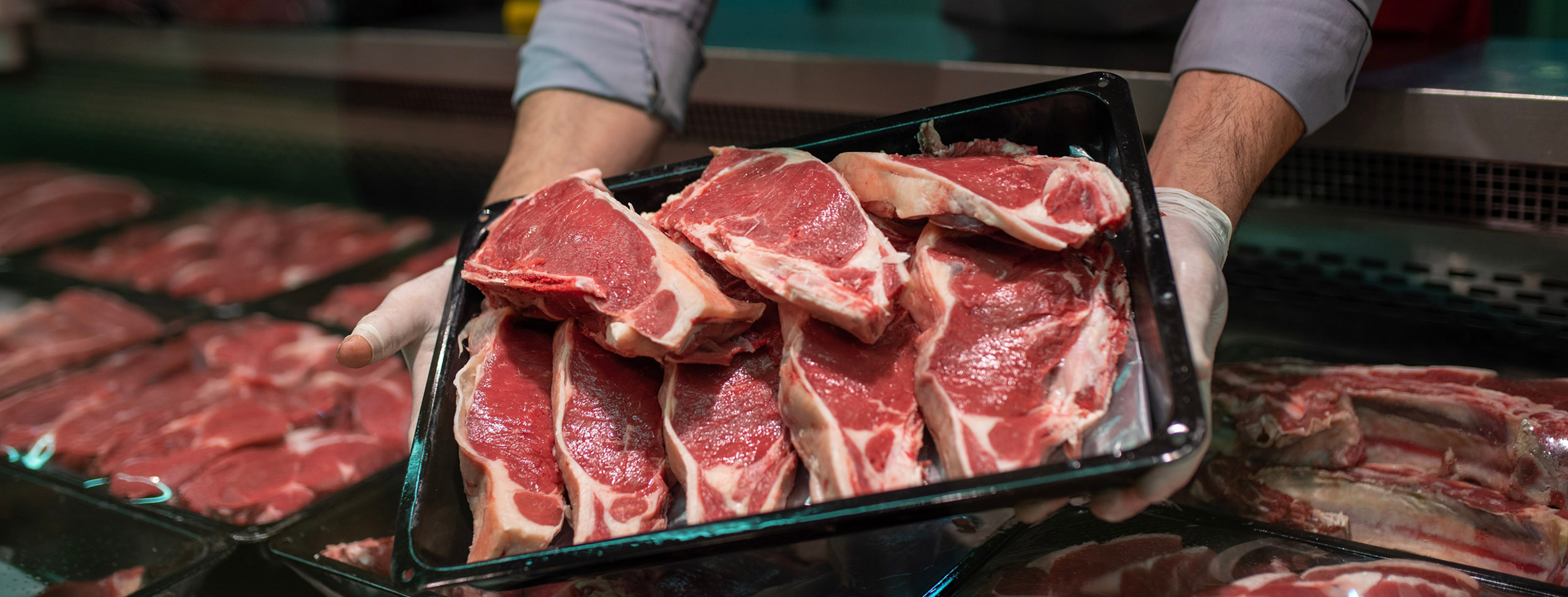
Executive Order on beef tariffs delayed. On May 12, a White House official reportedly stated that the Administration was delaying the release of an Executive Order (EO) that would have suspended tariffs on imported beef for 200 days. The EO, the official stated, is being fine-tuned. Its goal will be to reduce the price of beef in the US while giving US ranchers time to rebuild the American cattle herd. Beef prices in the US have reached near-record highs, rising more than 16 percent since January 2025, an increase driven by high consumer demand, widespread drought, diminished herd size, and the halt of livestock imports from Mexico over concerns about the spread of the parasitic New World screwworm. The USDA has projected that a record 5.8 billion pounds of beef will be imported into the US this year, up about six percent from 2025 and 25 percent from 2024.
China commits to USD17 billion in new US agricultural products. On May 18, Reuters reported that China has committed to buying at least USD17 billion of US agricultural products annually for three years, in addition to already agreed-upon soybean purchases. The White House announcement of the commitment was released in the wake of the May 14–15 summit in Beijing, a high-profile state visit between US President Donald Trump and Chinese President Xi Jinping. The reported commitment would mean that China will import USD28 to USD 30 billion in US farm products annually, which is well below the 2022 peak of USD38 billion but sharply above last year's figure of USD8 billion and higher than 2024’s USD24 billion. To reach the new goals, China will have to greatly increase its purchases of wheat, feed grains, meat, and non-food agricultural products such as cotton and timber.
USDA rolls out Phase 4 of meat processing grant program. On May 7, USDA Rural Development announced it is rolling out Phase 4 of the Meat and Poultry Processing Expansion Program (MPPEP). The primary purpose of MPPEP Phase 4 is to support the American beef industry by diversifying the meat and poultry supply chain and opening local market opportunities. The program is making available USD60 million in funding, which will be divided equally into two separate categories, one for very small processors and small processors, and one for intermediate processors. Two kinds of grants will be available. Processing Expansion Project awards will range from USD50,000 to USD2 million to support a range of activities to increase and diversify processing capacity of American meat and poultry, including equipment-only purchases over USD250,000, and necessary improvements, upgrades, renovations, or retrofits to an existing facility needed to install the equipment. Simplified Equipment-Only Projects awards will range from USD10,000 to USD250,000 for projects that only request the cost of equipment and do not include renovation, labor, installation, or certification costs. Both categories will require business matches. More details about these grants can be found here. Applications may be submitted until August 7.
To address rising food costs, Administration delays deadlines for HFC refrigerant phasedown. President Trump and Environmental Protection Agency Administrator (EPA) Lee Zeldin have announced the “Reconsideration of Certain Regulatory Requirements Promulgated Under the Technology Transitions Provisions of the AIM Act,” a final rule delaying deadlines for the phasedown of hydrofluorocarbons (HFCs) in cooling systems. The rule addresses aspects of the American Innovation and Manufacturing (AIM) Act – which was signed by President Trump during his first term and directs the EPA to phase down HFCs. On May 21, President Trump called the planned HFC phasedown “unnecessary and costly” and stated that maintaining the original timeline was “driving up the price of transporting and storing refrigerants and various goods,” raising costs for consumers and driving grocers out of business. The new rule, among other things, extends compliance deadlines for new supermarket cooling systems from 2027 to 2032 and exempts all road refrigerant appliances used to transport goods from requirements to address leaks of HFCs. President Trump and Administrator Zeldin also announced a proposed rule that would modify the Emissions Reduction and Reclamation (ER&R) Final Rule, which applies to recovery and recycling of HFC from repaired or retired cooling equipment. See EPA’s fact sheet on the new rule here.
FAO warning: Hormuz closure may trigger a global “systemic agrifood shock.” The rising price of fertilizer and its effect on the agricultural sector and global food supplies is receiving renewed attention this week. A May 25 warning from the United Nations Food and Agriculture Organization (FAO) stated that the closure of the Strait of Hormuz “is not a temporary shipping disruption but the beginning of a systemic agrifood shock that could trigger a severe global food price crisis within six to 12 months.” FAO Chief Economist Maximo Torero stated on a podcast that the Strait’s closure is bringing the global food system close to a point where the damage “may no longer reverse quickly.” If the closure extends beyond 90 days, he continued, farmers could be forced to make decisions about crops and fertilizer that would lock in lower grain supplies globally throughout 2027, potentially turning food inflation from a temporary disruption to a long-term global economic drag. FAO is calling on world governments to immediately take three steps: avoid imposing export restrictions on food and fertilizer; enhance monitoring of markets to remain aware of sudden fluctuations; and increase financial support for farmers. Meanwhile, on May 19, Kentucky Governor Andy Beshear urged Congress to pass S 4148, the Homegrown Fertilizer Act, a bipartisan bill that would provide farmers with low-interest loans and grants and expand US fertilizer production.
Avian flu update.
- In the 30 days before this writing, USDA’s Animal and Plant Health Inspection Service (APHIS) confirmed outbreaks of the H5N1 variant of avian flu in 11 commercial flocks in the US. Of note: overall, outbreaks of the disease are slowing down across US commercial poultry operations. Many layer flocks have fully recovered, leading to an overall increase in egg supplies and a decline in the price of eggs. Retail prices for shell eggs are currently 62 percent lower than they were a year ago. However, concerns are being raised about the ramifications of the sharp price decline for farmers, who reportedly are being paid 93 percent less for shell eggs than a year ago. In a recent American Farm Bureau Federation report, economist Bernt Nelson warned, “Prolonged periods of below breakeven prices could force farms out of the market and contribute to continued consolidation in the egg industry.”
- China has lifted H5N1-related poultry export restrictions it had placed on 17 US states for products made on or after May 15. The states are Alabama, Alaska, Arizona, Kentucky, Massachusetts, Nebraska, Nevada, New Hampshire, New Mexico, Ohio, Oklahoma, Oregon, Tennessee, Texas, Utah, Virginia, and West Virginia.
- On May 7, the Centers for Disease Control and Prevention’s Morbidity and Mortality Weekly Report published “Serologic Evidence of Highly Pathogenic Avian Influenza A(H5N1) Virus Infection in a Veterinary Professional Exposed to an Infected Domestic Cat—Los Angeles County, California, December 2024–January 2025,” a study documenting transmission of 5N1 from infected domestic cats to their humans. The study states, “Pet owners are advised not to feed raw animal products to cats.” In related news, an Oregon jury has found that Wild Coast Pet Foods must pay USD808,000 to a man whose indoor cat died of H5N1 after eating raw chicken pet food contaminated with the virus. In February last year, Wild Coast voluntarily issued a recall for certain lots of its frozen Boneless Free Range Chicken Formula, a raw food sold at retail outlets in Oregon and Washington State, and the company later told its customers it had “transitioned to fully cooked poultry recipes to eliminate any potential risk” to cats of avian flu.