
10 September 2026 • 13 minute read
Inside Competition: September 2026
This month in antitrust and competition lawCivil enforcement
FTC seeks public comment on enforcement policy statement regarding personalized pricing.
On August 19, 2026, the Federal Trade Commission (FTC) released a proposed enforcement policy statement concerning businesses’ use of consumers’ personal data to set individualized prices. Although the FTC stated that it does not have the authority to ban personalized pricing outright, it cautions that such practices may violate Section 5 of the FTC Act, unless businesses clearly and conspicuously disclose that a price is personalized, the basis for the personalization, and the types of data used. The FTC is seeking public comment on the proposed statement. For more information, please see DLA Piper’s related alert.
Author: Antonia Mordino
FTC stipulated order resolves antitrust concerns involving Zillow–Redfin Agreement.
On August 24, 2026, Zillow, Redfin, the FTC, and five states agreed to a stipulated order resolving regulatory claims against Zillow and Redfin. The complaint alleged that Zillow unlawfully agreed to pay Redfin USD100 million to exit the internet listing services (ILS) rental housing advertising market. The order removes the challenged agreement terms, requires Redfin to reenter the ILS market, obligates Redfin to invest in becoming a stronger competitor to Zillow, and requires Zillow to provide employee information to support Redfin’s recruiting efforts. The FTC stated that the stipulated order reflects its commitment to preserving competition in housing and rental markets.
Author: Antonia Mordino
FTC finalizes consent order in Ascension Health–AmSurg transaction.
On August 24, 2026, the FTC issued a final consent order resolving its challenge to Ascension Health Alliance’s proposed USD3.9 billion acquisition of AmSurg LLC. The order requires Ascension Health Alliance to divest seven ambulatory surgery centers across five metropolitan areas to preserve competition for certain outpatient gastroenterology, ophthalmology, and orthopedic services. It also requires advance notice of certain future ambulatory surgery center acquisitions in those markets, including transactions that may otherwise fall outside premerger notification requirements, underscoring the FTC’s continued use of forward-looking remedies to scrutinize consolidation in localized healthcare markets.
Author: Antonia Mordino
[Poland] Polish competition authority imposes fines in agricultural machinery cartel case.
In a press release issued on August 7, 2026, the President of Poland’s Office of Competition and Consumer Protection (Urząd Ochrony Konkurencji i Konsumentów, or UOKiK) announced that UOKiK had found AGCO, a wholesale distributor of Valtra, Fendt, and Massey Ferguson agricultural machinery in Poland, and eight of its authorized dealers to have participated in a cartel involving market sharing and the exchange of pricing information.
According to UOKiK, the parties allocated customers and territories, exchanged pricing information, and restricted dealers from competing outside their designated areas. The conduct allegedly occurred from 2012 to 2023 and concerned the distribution of agricultural machinery and, in certain cases, spare parts. UOKiK stated that customers seeking offers from dealers operating outside their allocated territories were redirected, offered less favorable terms, or refused service.
The authority imposed fines totaling approximately EUR32 million on the companies involved, as well as fines on several managers. One dealer obtained a 50 percent reduction of its fine under the leniency program. The decision, which is not yet final, forms part of a broader series of UOKiK enforcement actions in the agricultural sector in recent years.
Author: Urszula Grebowska, Michal Orzechowski, LL.M.
Civil litigation
Maryland court dismisses antitrust challenge to pharmacy residency matching program.
On August 12, 2026, the U.S. District Court for the District of Maryland in the case Albert et al. v. American Society of Health-System Pharmacists, et al., Civil Action No. DBL-25-673, granted defendants’ motions to dismiss in their entirety. Four former pharmacy residents brought a putative class action under the Sherman Act alleging that American Society of Health-System Pharmacists (“ASHP”), the National Matching Service (”NMS”), and numerous healthcare employer defendants conspired to artificially limit the number of available residency positions and suppress residents’ compensation through the ASHP Resident Matching Program.
The Court dismissed, without prejudice, the claims against ASHP and the employer defendants. On the merits, the Court held that the complaint failed to plausibly allege a horizontal agreement between the employer defendants. It instead merely alleged a “rimless wheel” of separate vertical agreements. The Court likewise found that the alleged exchange of compensation information that was publicly available in a residency directory was not an unreasonable restraint of trade.
Author: Michael Pullos
Nuclear power plant workers’ wage-fixing lawsuit dismissed.
On August 5, 2026, the District of Maryland dismissed a proposed class action alleging that nuclear energy companies conspired to suppress workers’ compensation by fixing wages and exchanging sensitive pay information. The court held that the claims were time-barred under the Sherman Act’s four-year statute of limitations because the named plaintiffs did not allege employment with any defendant after July 2021 and failed to plead facts supporting the continuing-violation or fraudulent-concealment exceptions.
The court also found that the complaint failed to plausibly allege a per se wage-fixing agreement because the alleged collaboration, information exchanges, and parallel wage increases did not establish an agreement on compensation rates or a formula for setting them. Most claims were dismissed without prejudice, and the court gave the workers 45 days to seek leave to amend their complaint.
Author: Antonia Mordino
Criminal enforcement
Oklahoma jury convicts Sioux Erosion Control and two employees of price-fixing and bid-rigging charges involving publicly funded contracts
On August 19, 2026, a federal jury in the US District Court for the Western District of Oklahoma found Sioux Erosion Control, Inc., its Vice President, BG Dale Biscoe, and its employee, Randall David Shelton, guilty of knowingly entering into and engaging in a conspiracy to suppress and eliminate competition by fixing prices and rigging bids for erosion-control products and services.
The verdict followed a jury trial that began on August 11, 2026 in a case involving more than USD100 million in publicly funded contracts across Oklahoma. According to the US Department of Justice (DOJ)’s August 2024 indictment, the conduct began as early as September 2017 and continued until April 2023. The government claimed that the co-conspirators agreed to allocate erosion-control contracts based on geographic divisions within Oklahoma and other criteria established in advance of bid “letting” dates.
It further alleged that the co-conspirators agreed not to compete for contracts and rigged bids either by submitting intentionally high-priced bids for projects allocated to another company or by declining to bid altogether. The defendants also allegedly agreed to raise and maintain prices for solid-slab sodding and other line items in erosion-control contracts.
Additionally, certain bids were submitted for projects using federal funding, including funding from the US Department of Transportation. The DOJ charged the conspiracy as a per se unlawful, and therefore unreasonable, restraint of trade and commerce in violation of Section 1 of the Sherman Act.
Authors: Mandy Chan-Lucero, Deyanira Cuellar, Stephen Cosenza
Bovine artificial insemination manager pleads guilty in first charge arising from DOJ cattle bid-rigging investigation.
On August 6, 2026, the DOJ announced that Herbert D. Lutz, a manager of a bovine artificial insemination company, pleaded guilty to conspiring to rig bids for the purchase of cattle used either for the direct production of semen or for the development of animals for future semen production. According to documents filed in the US District Court for the Southern District of Ohio, Lutz conspired to rig bids as early as October 2018 through at least May 2024.
In advance of cattle auctions, Lutz and his co-conspirators agreed which company would win the bid, and during the sales, the agreed-upon losing company would either decline to bid or submit an intentionally losing bid before withdrawing to permit the agreed-upon winner to prevail. Through those efforts, Lutz’s employer acquired cattle worth more than USD1.6 million through rigged sales.
Lutz is the first defendant to be charged and to plead guilty in the ongoing investigation into bid rigging in the bovine artificial insemination industry. He faces a maximum penalty of ten years in prison and a USD1 million criminal fine for violating Section 1 of the Sherman Act. The DOJ Antitrust Division’s Chicago Office is prosecuting the case, which was investigated with assistance from the US Department of Agriculture’s Office of Inspector General.
Authors: Mandy Chan-Lucero, Deyanira Cuellar, Stephen Cosenza
DOJ seeks extension of Procurement Collusion Strike Force complaint form, signaling continued reliance on public tips.
On August 3, 2026, the DOJ’s Antitrust Division published a 60-day notice in the Federal Register announcing that it would submit a request to the Office of Management and Budget to extend its previously approved information collection for the Procurement Collusion Strike Force (PCSF) complaint form. The notice invites public comment until October 2, 2026.
The PCSF complaint form “facilitates reporting by the public of complaints, concerns, and tips regarding potential antitrust crimes affecting government procurement, grants, and program funding.” The Division estimates that the collection will receive an average of 100 responses annually, that each response will require 30 minutes, and that the collection will result in 50 annual burden hours.
The Division asked commenters to address whether the collection is necessary and has practical utility; the accuracy of its burden estimate; how the quality, utility, and clarity of the information collected could be enhanced; and how the burden on respondents could be minimized.
Authors: Mandy Chan-Lucero, Deyanira Cuellar, Stephen Cosenza
Merger review and challenges
FTC secures permanent injunction blocking Henkel’s acquisition of Liquid Nails.
On August 14, 2026, after a seven-day trial, the US District Court for the Southern District of New York granted the FTC’s request for a permanent injunction blocking German multinational Henkel AG & Co. KGaA (Henkel)’s proposed USD725 million acquisition of Liquid Nails. The FTC alleged that the combination of Henkel’s industry-leading Loctite brand with its main competitor would eliminate competition between the two construction adhesive brands and lead to higher prices, lower quality, and reduced innovation. The FTC characterized the result as marking “the Commission’s new approach to seeking permanent injunctions to block anticompetitive mergers without the need to continue cases in administrative proceedings.”
Authors: Paolo Morante, Stephen Cosenza Jr.
DOJ closes investigation of Seismic–Highspot merger after review of AI entry.
On August 19, 2026, the DOJ’s Antitrust Division announced the closure of its investigation into the proposed merger of Seismic Software, Inc. and Highspot Inc., two providers of sales-enablement software platforms. The Division’s investigation included Second Requests and a timing agreement with the parties that prioritized the production of evidence relevant to artificial intelligence (AI) entry and repositioning.
According to the Division, the transaction would be unlikely to result in significant harm to competition because evidence indicated that AI-native companies are growing quickly to win sales-enablement customers and are increasing competitive pressure on legacy providers. The matter suggests that merging parties advancing an AI-driven entry defense may be able to narrow Second Request burdens where ordinary-course documents and third-party data substantiate the claim.
Authors: Paolo Morante, Stephen Cosenza Jr.
Senators call for FTC investigation of Sysco’s USD29.1 billion acquisition of Restaurant Depot.
On August 26, 2026, US Senators Tammy Baldwin (D-WI) and Cory Booker (D-NJ) announced that they sent a letter to FTC Chairman Andrew N. Ferguson requesting that the Commission investigate Sysco’s proposed USD29.1 billion acquisition of Jetro Restaurant Depot. According to the letter, the transaction would further consolidate the nation’s food distribution system, weaken competition, and increase costs for independent restaurants and consumers.
The senators contended that Restaurant Depot’s “cash-and-carry” model, which has no contracts, delivery fees, or minimum orders, provides small businesses with an alternative to traditional broadline distributors such as Sysco and a benchmark for comparing prices. They also referenced the FTC’s 2015 challenge to Sysco’s proposed acquisition of another large US food distributor and characterized the current transaction as “an effort to vertically integrate the food distribution space and eliminate a competitor price check that helps maintain lower-cost options.”
Authors: Paolo Morante, Stephen Cosenza Jr.
Split two-member FTC clears IonQ transaction.
In July 2026, a split two-member FTC permitted IonQ’s acquisition of semiconductor foundry SkyWater to proceed following an investigation. FTC Commissioner Mark R. Meador stated that the transaction raised competitive concerns and favored a behavioral remedy, while FTC Chairman Andrew N. Ferguson found insufficient evidence that it would substantially lessen competition. With only two votes cast, and neither supporting a lawsuit, the FTC lacked a majority to act on the proposed remedy. Ferguson explained that ending the investigation was therefore the “only course available.” Both companies received Second Requests approximately three months after the transaction was announced in January 2026, and the investigation remained ongoing for several months before the FTC closed the matter.
Authors: Paolo Morante, Stephen Cosenza Jr.
Recent guidance
[UK] UK Competition Appeal Tribunal updates guidance on confidential information in competition disputes.
Noting that large volumes of documents continue to be subject to excessive and unparticularized claims to confidentiality, as well as the complexity of confidentiality ring arrangements, the United Kingdom Competition Appeal Tribunal (CAT) has updated its practice direction on the management of confidential information in CAT proceedings. The new practice direction places greater emphasis on the principle of open justice and provides a more detailed framework for assessing confidentiality claims. It clarifies that sensitivity must be assessed using an objective test and balanced against the relevance of the information to the proceedings and broader public interest considerations. The practice direction also provides further guidance on the use and operation of confidentiality rings.
Reflecting these principles, the new practice direction makes clear that client representatives may need to be admitted to confidentiality rings at the appropriate stage of proceedings to ensure that parties understand the case they must meet. It also states that blanket or insufficiently substantiated claims for confidential treatment are likely to be rejected. The practice direction encourages early cooperation among the parties regarding the management of confidential information and warns parties that failure to adhere to the practice direction may result in adverse cost consequences.
Authors: Matt Evans, Sam Szlezinger, Claus Wenzler
Managing editors
Administrative editors


Contributors





Daniel Colgan

Darach Connolly
Amanda Cooper

Thomas Corrigan
Stephen Cosenza
Deyanira Cuellar Sandoval

Sander De Volder

Matt Evans
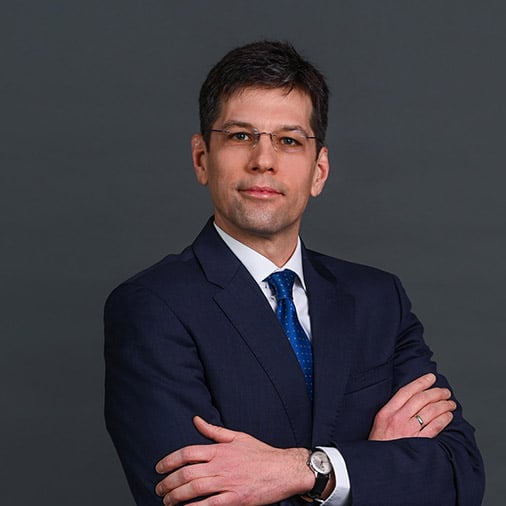
Gábor Fejes

Urszula Grębowska
.jpg?h=506&iar=0&w=506)
Dr Justus Herrlinger
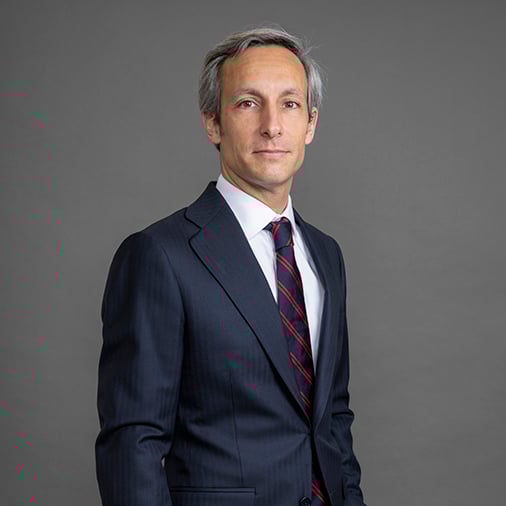
Joaquín Hervada
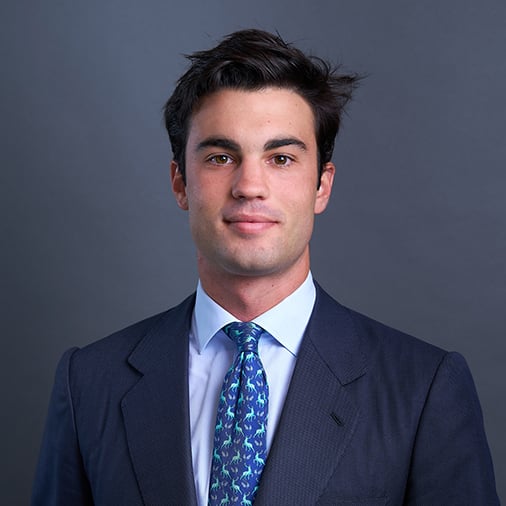
Miguel Higuero Ureña

Javier Huerta Rebollo

Alexandra Kamerling

Jonas Kranz
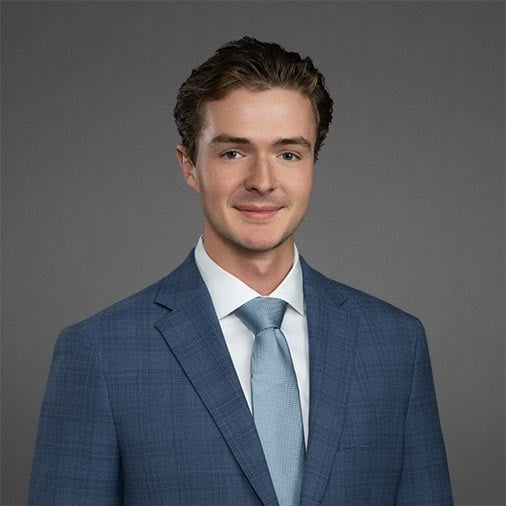
Jack Mansur

Kayla Martin-Blue

Antonia Mordino
Paolo Morante

Sophia Prümen

Michał Orzechowski
Michael Pullos

Amadeu Ribeiro
Jeremy Sher

Wrede Smith

Sam Szlezinger

Claus Wenzler